
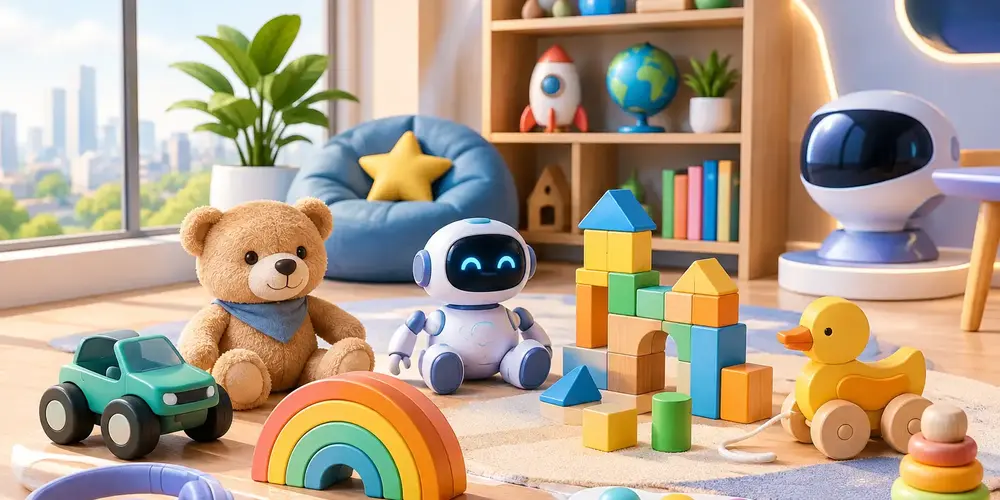
When a buyer chooses a toy spontaneously, the decision is often determined not by one major purchase, but by clear benefit: the child will find it interesting, it will be suitable as a gift, and the product will be easy to carry along. Therefore, children's toy trends in retail are not just about the latest characters or loud packaging. They show which products parents, relatives and gift buyers choose repeatedly and which categories help create a clear, fast-moving assortment.
For small shops, traders and practical buyers, balance is important. The assortment should include both products that immediately grab a child's attention and simple products for everyday activity, travel or gifting. Trends are useful as a guide, but they must not replace observing demand within your own customer base.
What is currently shaping toy demand?
Buyers are increasingly looking for toys with a specific use. It could be an activity at home on a rainy day, a small reward for a child, a supplement to a birthday gift or a product that is convenient to take on a journey. In such purchases, compact size, clear function and the ability to start playing immediately work well.
Age suitability is also important. Products for babies, pre-school children and schoolchildren should not be mixed on one toy shelf just by colour or packaging. The buyer wants to quickly understand what the product is intended for. For the trader, this means clear category division and essential information stated in descriptions.
In recent years, interest has grown in toys that a child can use in more than one way. A construction set can become a vehicle, a building or part of imaginative play. Figurines can supplement sets already at home. A creative set is not just one activity if multiple pieces of work can be created from it. Such flexibility increases the perceived value of the product, even if the product itself is simple.
Games where the child creates the result
Creative sets, stickers, colouring activities, modelling materials and craft accessories maintain a stable place in the assortment. Their advantage is clear: the child not only watches or presses a button, but creates, combines and shows what they have made. For parents, such products often seem useful because they help fill free time without complicated preparation.
In this category, it is important not to overestimate the scope of the set. Very extensive content does not always mean easier sales. The buyer often has enough with an understandable idea and available materials. Smaller sets are suitable as an additional gift or everyday activity, whilst larger sets are useful for holidays and seasonal purchases.
Collecting and little surprises
Small figurines, animals, vehicles, doll accessories and themed small items maintain demand because children like to supplement their existing collection. Here, purchases are often prompted not by necessity, but by the desire to find a new model, colour or character. This encourages repeat purchases.
For the trader, collectible items should be displayed so that they are easy to spot, but do not look like an accidental basket of small items. Group similar products together and maintain several models within one theme. If only one unit of each type is available, interest may be less than with a small but visibly complete series.
Children's toy trends in assortment planning
A practical assortment is not created by purchasing only seasonal novelties. It is created from products with different purchasing reasons. One part is for gifts, another part for everyday activity, yet another for quick impulse purchases. If all toys are similar in size, price perception or use, the buyer has fewer reasons to choose more than one product.
It is safest to build the assortment in several tiers. The first includes universal toys, such as balls, cars, dolls, animal figurines and sandpit accessories. The second includes creative and educational activities. The third includes current themes, seasonal products and products with striking visual effect. Such division helps avoid relying on one short-term demand wave.
When buying for wholesale, it is not necessary to order a large quantity of every novelty immediately. A first small addition allows you to test the reaction: whether the product is asked for, whether it is noticed, whether it is purchased together with other products. If demand is stable, stock can be supplemented purposefully. Visible remainder and product article number make repeat orders easier, especially for shops that regularly refresh shelves.
Classic toys have not disappeared
Trends often create the impression that buyers want only something brand new. In reality, classic toys continue to sell because their function is clear. A toy car, ball, doll, play dishes or sand set are not dependent on a brief period of popularity. These products are particularly useful for maintaining stability in the range between festive seasons.
The difference lies in the design and additions. A buyer can choose a familiar product in a new colour, with extra details or in a thematic set. Therefore, classic categories are worth reviewing regularly rather than leaving unchanged for several years.
Seasonality determines more than it seems
In spring and summer, interest in outdoor toys increases: balls, water toys, sand accessories, bubbles and active games. These products need to be planned in advance, as buyers search for them when the weather is already suitable. A delayed restock means missing the demand window.
In autumn, more attention is given to indoor activities, creative sets, board game elements and toys suitable for quieter indoor play. In contrast, during festive periods, the gifting factor becomes decisive. The buyer needs a product that can be selected quickly and given easily. Clear packaging, understandable age recommendations and a visible product theme help more at this time than a complex description.
Even minor calendar situations shape sales: children's parties, graduations, camps, family events and seasonal celebrations. For these purchases, small, easily sharable products and creative activities for groups are useful. This is a category where a wide range of stock often provides an advantage.
Safety and practical information are not secondary
In toy purchases, emotion is important, but particularly for parents and business buyers, decisions are determined by safety information. Age limits, small parts, materials, usage instructions and packaging condition must be considered. If a product is intended for very young children, this information should be noticeable already at the selection stage.
A retailer benefits from a simple principle: do not sell a promise that the product cannot deliver. If a toy is small, it can be presented as convenient for travel or as an additional gift, not as the main holiday surprise. If a creative set requires adult assistance, this should be stated clearly. Honest information reduces disappointment and helps the buyer choose according to the situation.
How to notice what to add in the next order
The best source of information is your own purchase dynamics. Look not only at what is selling the most, but also at what buyers are purchasing together. If figures are often bought alongside toy cars, both categories are worth keeping side by side. If creative materials are bought before holidays, the restock should take place before demand increases, not after.
It is also valuable to note questions that the current range does not answer. Are buyers asking for toys for a specific age? Are small gifts needed for children's events? Are outdoor activity products lacking? Such questions reveal practical gaps much better than general interest in new items.
Lutini.lv's wide range of categories allows toy orders to be combined with other everyday products, gift wrapping or seasonal additions. This is convenient for retailers who wish to refresh several product groups in one order and maintain shelf choice for different purchasing reasons.
A good toy range is not one with the most products. It is a range where a buyer quickly finds a suitable product for the child's age, situation and their intention. Regularly compare demand with stock levels, leave room for proven basic products and introduce new trends with a clear purpose - so that the next order is justified, not just current.