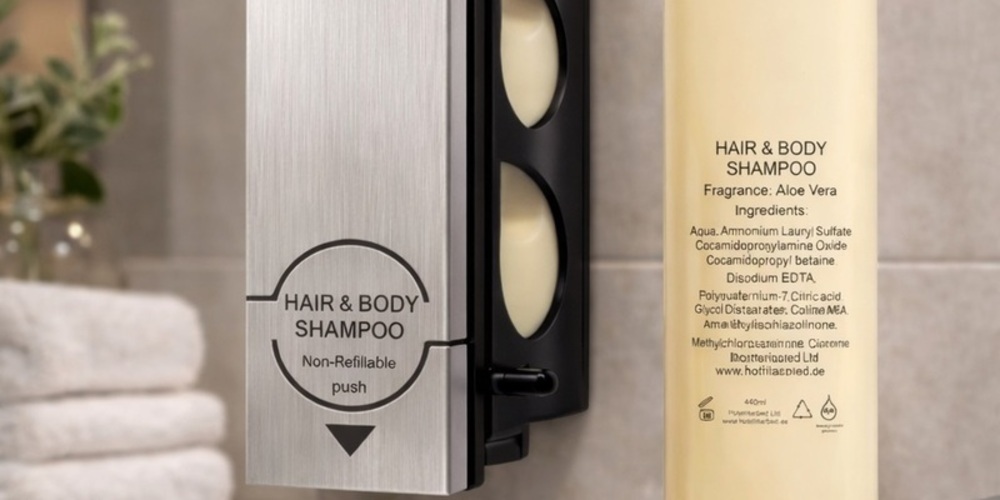
- A sealed dispensing system with replaceable bottles.
- A refillable dispensing system, where hygiene products are replenished as required.
- Small, single-use packages — 20 ml, 30 ml or 50 ml bottles and tubes.
Our experience indicates that all three solutions are used by hotels in Latvia. Economy hotels tend to choose refillable dispensing systems, mid-range hotels often use sealed systems with replaceable bottles, while higher-end hotels frequently provide hygiene products in small individual packages.
The most suitable solution depends on the hotel’s concept and priorities. Factors such as cost, hygiene, ease of use, packaging design, fragrance and environmental impact should all be considered.
Sealed dispensing systems and individual packages offer a high level of hygiene, giving guests confidence in the product’s origin and contents. The main advantage of refillable dispensing systems, meanwhile, is usually their lower cost.
Why Is Accurate Dispensing Important?
Some sealed dispensing systems do not provide a precisely measured amount of product with each use. If the dispenser bottle must be squeezed by hand, the amount released may depend on the user’s strength and habits. As a result, significantly more product may be used than is actually necessary.
Only a small amount of soap is generally needed for washing hands. Likewise, washing hair does not require an excessive amount of shampoo. If a dispenser releases too much product at once, the unused amount is simply washed down the drain.
This means that the price of the product is not the only important consideration. The dispenser must also be capable of delivering a consistent and optimal amount with every press.
Problems Caused by Inefficient Dispensing
Excessive use of cleansing products creates two significant problems:
- Higher costs for the hotel — soap, shampoo and other hygiene products must be replenished or replaced more frequently.
- Greater environmental impact — more cleansing products enter the wastewater system, and more packaging is consumed.
These considerations are particularly important for hotels that follow sustainability principles or aim to comply with the requirements of environmental programmes such as Green Key.
A Cost-Effective Dispensing System with a Precise Dose
Fortunately, dispensing systems are available that take into account the interests of both guests and hotels. Their main advantage is the precise amount of product released with each press.
For example, the Senser dispensing system releases 4 ml of product with each press. If a guest requires more, the dispenser can simply be pressed again. This helps to reduce unnecessary product waste.
Such a system can help hotels to:
- reduce daily operating costs;
- forecast hygiene product consumption more accurately;
- replace dispenser bottles less frequently;
- reduce the amount of cleansing products entering the wastewater system;
- support the hotel’s sustainability goals.
As the Green Key programme and other sustainability initiatives become increasingly popular in Latvia, the efficient use of cleansing products may become an increasingly important part of hotel operations.
Cost Comparison
Let us compare the costs of sealed dispensing systems using a simple example.
1. A sealed dispensing system without precise dosing
If each dispenser uses one replacement bottle per month, a single dispenser will require 12 bottles per year.
2. A sealed dispensing system with precise dosing, such as Senser
If a dispenser uses approximately 0.4 of a bottle per month, it will require approximately 4.8 bottles per year.
A Precise Dispensing System Can Reduce Costs 2.5-Fold
The savings are achieved because the cleansing product is dispensed according to guests’ actual needs, thereby reducing unnecessary consumption.
The more rooms and dispensers a hotel has, the greater the total annual savings may be. At the same time, the hotel’s environmental impact is also reduced.