
Jewellery comes into contact with hand cream, perfume, sweat, dust and water every day. Therefore, the question of how to clean jewellery is not just about shine. An incorrectly chosen product can scratch metal, remove coating or damage stone settings. The safest approach is to first identify the material and only then choose the cleaning method.
For cheaper everyday jewellery and costume jewellery extra care is even more important. They often have a thin layer of gold, silver or other tone coating that is not designed for aggressive scrubbing or prolonged soaking. Meanwhile, gold and silver jewellery is usually more durable, but it also does not suit everything found on a household cleaning shelf.
Identify the jewellery material before cleaning
Examine the jewellery in good lighting. On rings, chain clasps or pendant backs there is sometimes a hallmark, for example, 925 for silver or 585 for gold. If there is no hallmark, the jewellery may be costume jewellery, stainless steel or another metal with a decorative coating. If you are unsure, choose the gentlest method - dry, soft cloth.
It is also important to assess the decorations. Glass crystals, plastic elements and firmly set synthetic stones usually tolerate gentle cleaning. Pearls, coral, amber, opal, turquoise and glued stones are more sensitive. They should not be soaked, cleaned with acid or rubbed hard.
Check that the clasp, chain links and stone settings are secure. If you notice a moving part, crack or raised stone, it is better to postpone water cleaning. First, the jewellery should be taken for repair, as moisture can get into the setting and worsen the situation.
How to Clean Jewellery at Home Safely
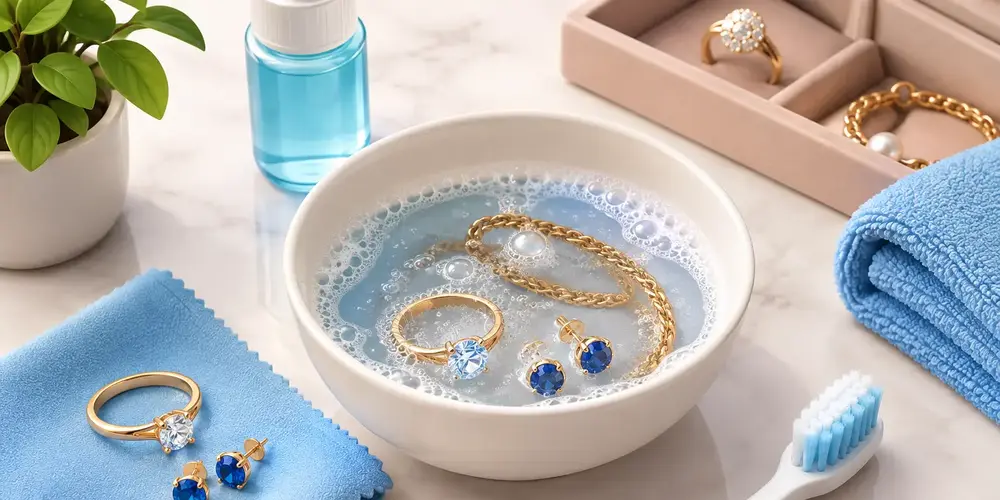
Most smooth metal jewellery only needs warm, not hot water, a drop of mild liquid soap and a soft microfibre cloth. Pour water into a bowl rather than cleaning under running water from a tap. Small earring parts or chains can easily get lost.
Jewellery can be briefly held in soapy water, then gently cleaned with a very soft toothbrush. The brush should be new and have soft bristles. It works well on areas around stone settings, engravings and chain links where dirt accumulates. Do not press hard - cleaning should be slow, not abrasive.
Then rinse with clean water only if the material allows, and dry thoroughly. Moisture remaining under a stone or clasp can cause build-up and speed up colour change in the metal. Leave the jewellery on a dry cloth until completely dry, especially before putting it in a box or bag.
Do not use toothpaste, scouring pads for dishes, baking soda or powder cleaning products. These methods are often mentioned on the internet, but their abrasive particles can cause fine scratches. Initially these may not be noticeable, but over time the jewellery loses its even shine.
Gold Jewellery
Gold can usually be cleaned with warm soapy water and a soft cloth. If the jewellery has no sensitive stones, brief soaking helps remove greasy build-up. After cleaning, polish the gold surface with a clean, dry microfibre cloth rather than paper towel. Paper can be rougher than it seems.
White gold and gold-plated jewellery should be cleaned with particular care. White gold surface is often protected by a rhodium coating, but gold-plated jewellery has a thin coating. Do not rub it with metal polishing products and do not soak for long. If shine is lost due to coating wear, home cleaning will not restore it.
Silver Jewellery
Silver can darken over time. This is not just dirt - the metal reacts with substances in the air, as well as with cosmetics and moisture. Light tarnishing is best removed safely with a cloth intended for silver polishing. Clean with light movements and do not polish one spot for too long.
If silver jewellery is heavily tarnished, a professional silver cleaning product may help, but the instructions should be checked before use. It may not be suitable for jewellery with pearls, amber, enamel or intentionally darkened finishes. Some jewellery pieces have dark indentations as an intentional design element, not dirt that needs to be removed.
It is useful to wipe silver after wearing and store it in a dry, closed package. The less jewellery is exposed to moist air, the less frequently more intensive cleaning will be needed.
Costume Jewellery and Coated Jewellery
The main advantage of costume jewellery is a wide range for everyday wear, but its lifespan depends on maintenance. Metal coating can react to water, perfume and body care products. Such jewellery is best cleaned with a dry, soft cloth immediately after wearing.
If dirt is visible on the surface, the cloth can be slightly dampened and then the jewellery dried immediately. Do not soak costume jewellery in water and do not use alcohol, acetone or window cleaning products. They can dissolve glue, make stones cloudy or change the tone of the coating.
Jewellery with glued crystals is a special case. Even brief soaking can weaken the glue, and the stone may later fall out. Clean only around the stone using a dry cotton bud or cloth corner.
Sensitive Stones and Natural Materials
Pearls should only be cleaned with a slightly damp, very soft cloth. They are not recommended to be stored in a completely sealed plastic package, as the natural material needs moderate environmental moisture. Pearl necklaces should also not be hung if the thread is stretched or has become loose.
Wash amber briefly in cool or lukewarm water if really necessary, and dry immediately. Do not use hot water, alcohol, perfume or chemical cleaners. Amber is relatively soft, so it can be easily scratched.
Opal, turquoise, coral and other porous minerals only require dry or slightly damp cloth. These materials can absorb liquids and change colour. If the jewellery is valuable or has a complex setting, the safest solution is a jeweller's consultation.
Daily Habits That Reduce the Need for Cleaning
Put on jewellery last - after applying cream, hairspray, perfume and makeup. Before showering, sport, sauna, swimming pool, house cleaning and washing dishes, remove them. Chlorine, salt, sweat and household chemicals damage both metal and coating.
Store jewellery separately so chains do not knot and stones do not scratch other surfaces. Handy are small bags, a compartment box or original packaging. Fasten chains before putting them away - this reduces tangling risk.
Regular, gentle care is more cost-effective than occasional harsh cleaning. If jewellery starts to lose colour, coating peels or setting becomes loose, do not try to hide the problem with polishing. Replacing or repairing worn jewellery in time is often simpler than later looking for a lost stone.