
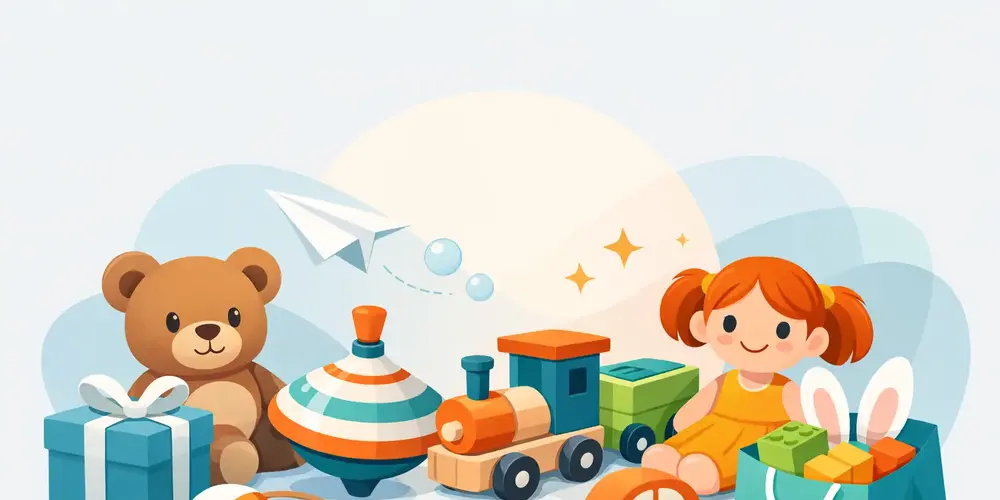
When you need a gift quickly and without unnecessary expense, children's gifts up to €10 are one of the most practical solutions. Such a budget is sufficient to find a useful, visually appealing and child-friendly gift - especially if the choice is made according to age, interests and the situation, rather than just a bright box.
With a small budget, the main thing is not to look for "everything in one", but to find a suitable item for a specific child. For one it will be a creative activity for a free evening, for another - a small toy for everyday enjoyment, for yet another - a practical school or hobby accessory. That is exactly why a cheap gift does not always mean a random purchase. A correctly chosen item is often used more than a more expensive but less suitable alternative.
How to choose children's gifts up to €10
The first filter is the child's age. At pre-school age, simple, ready-to-use items usually work better - balls, colouring sets, stickers, bath toys, soft accessories or small developmental items. School-age children often prefer items with a clear function: pen sets, pencil case contents, mini versions of board games, puzzles, craft supplies or thematic small gifts with favourite character motifs.
The second filter is the situation. A birthday gift differs from a small surprise package for a kindergarten group, a Christmas set for a class or a symbolic prize for an event. If you need to buy several gifts with the same budget, what matters most is not originality, but availability, consistent quality and convenient selection of several pieces.
The third filter is usability. Under €10, items that the child can use the same day work best. This could be a drawing set, modelling clay, a game figurine, bubble liquid, a colouring book, hair accessories, a bracelet-making set or a small seasonal item. If a gift is too specific or requires additional purchases, its value decreases.
Practical gift ideas for different ages
Younger children do well with simple sensory and visually understandable items. For example, colourful ball sets, soap bubbles, bath toys, small cars, animal figurines or soft accessories. At this age, immediate joy and safe use is important, rather than complex functionality.
Children aged approximately 4 to 7 years have wider opportunities with creative sets. Colouring books, markers, sticker sets, modelling clay, application materials and simple craft sets are a good option as they can be used at home without lengthy preparation. Here a budget of up to €10 often also allows you to put together a small gift set, rather than buy a single item.
School-age children often like items that look "more expensive" than they cost. Stylish writing supplies, pencil case additions, keychains, small board games, puzzles, mini building sets, hair and jewellery accessories, sporting leisure items or decorative trinkets for a room work well here. In this group, visual presentation is also important - a child quickly notices whether a gift looks current and up-to-date.
For teenagers, a budget of up to €10 is already tighter, so you need to choose more wisely. The best option is usually useful everyday small items: cosmetic pouches, hair accessories, small jewellery, notepads, phone accessories, mugs, decorative items or hobby-related things. Here "childish" toys work less well and more simple, useful items with tasteful appearance work better.
When to choose one item and when a set
If the budget is close to €10, one higher-quality item is often better than several random trinkets. This especially applies to birthdays, where the gift is presented individually and the child views it as the main surprise. In such a case, a single clear gift works better - for example, a creative set, puzzle, board game or thematic toy.
A set, on the other hand, is more advantageous if the gift is intended for a wider group of children or a universal choice is needed. For example, you can combine a colouring book with markers, hair bands with a mirror, a small toy with sweets, stickers with a notepad. A set has one advantage - it looks more complete visually, even if each individual item is cheap.
However, there is also a downside. Overly finely assembled gifts tend to look random. If creating a set, it is better to stick to one theme - drawing, crafts, school, beauty care, active leisure or season.
Children's gifts up to 10 euros for classes, events and groups
When you need to buy gifts for more than one child, the selection principle becomes very practical. Here, equal price, available stock and the ability to choose neutral items that suit different children are important. This is exactly where catalogue-style shopping works best, allowing you to quickly select several similar options at the same price level.
For class or nursery group gifts, there's no point in looking for very individual solutions. It's better to choose universal items - colouring sets, game pieces, stationery, stickers, mini toys, seasonal decorations or small accessories. It's important that the gifts are easy to divide, pack and distribute without additional assembly.
For events, competitions and children's parties, a budget of up to 10 euros is also sufficient. Here, prizes that are immediately understood and visibly valuable work well. A small construction set, puzzle, themed toy or a nice stationery set usually has a better effect than an overly abstract gift.
What not to buy when your budget is limited
The cheapest gifts, when chosen badly, quickly turn into unused purchases. The first mistake is an overly complicated toy with poor quality. If the mechanism breaks quickly or the item looks cheaper than expected, the child loses interest immediately.
The second mistake is a very age-specific choice without clear information about the child. If you don't know what the child likes, it's safer to choose a neutral creative or practical gift rather than a very specific theme. The same applies to items that require batteries, extra parts or adult assistance.
The third mistake is packaging dominating the contents. Sometimes an item looks good only in the box, but its real value is small. In the budget segment, it's more important to understand what the child will do with the gift rather than how big it looks on the shelf.
How to make a cheap gift look thoughtful
Much depends on selection here, not price. If the gift matches the child's interests, even within the 5 to 10 euro range it seems spot-on. For a girl who likes hair accessories and jewellery, a small set will be more suitable than a random toy. For a child who draws a lot, markers and a colouring book will bring more joy than a decorative trinket.
Simple presentation also helps. A gift bag, transparent packaging or coordinated colours create a neat impression. This is particularly useful when buying several types of children's gifts up to 10 euros and you need to achieve a unified look.
For a practical purchase, it's also important to check product availability and quantity. If you need several items at once, it's not practical to base your plan on one very specific item. Here, the advantage lies in a wide range and visible stock information, as this allows you to shop faster and without unnecessary last-minute substitutions. Both individual buyers and those who buy gifts for schools, events or resale appreciate this approach, and that's exactly why a warehouse-type offering like Lutini.lv is a convenient solution in this price segment.
How to think about the purchase, not just the price
A price of up to 10 euros is neither a plus nor a minus in itself. What matters is whether the item is suitable for the child's age, whether it's available in the required quantity and whether it can be used without complications. Sometimes a 3 euro gift is perfectly adequate, but other times it's better to spend the full budget on one sensible purchase.
If you need to choose quickly, the safest principle is this: the child understands the function, the age is appropriate, the price is fair and availability is normal. That's completely enough to make the gift successful. There's no need to overpay to give something the child won't actually use.
A good guide is a simple question - will the child want to open and use this gift on the same day. If the answer is "yes", the choice is usually correct.